
Protecting Country Against Invasive Species Program
We are pleased to be partnering with the Australian Government, through the Department of Agriculture, Fisheries and Forestry to deliver the Protecting Country Against Invasive Species Program.
This $4m Australian Government funded program is supporting Indigenous Ranger Groups in northern Australia to undertake Indigenous led on-ground pest and weed management to protect biodiversity and cultural values.
The program complements the Indigenous Ranger Biosecurity Program; will contribute to achieving the objectives in the Threatened Species Action Plan; and the growth and empowerment of Indigenous Ranger operations in northern Australia.
Invasive species management is a fundamental part of the day-to-day operations of Indigenous Land and Sea Managers across northern Australia. This program invests directly in the capability of Indigenous organisations to manage threats posed to culture and Country.
The program employs Regional Coordinators to support capacity building activities identified by ranger groups. Regional Coordinators are based in Broome WA, Darwin NT and Cairns QLD.
Funding will also be directed to projects, determined through a prioritisation process.
Watch these videos to learn more about how NAILSMA is working with Indigenous ranger groups to manage invasive species. Thank you to the Juunjuwarra Rangers for being an integral part of this story, find out about their work at www.jjcorporation.com.au.
$2 million boost for Indigenous rangers' fight against invasive species
In 2026, NAILSMA looks forward to continuing to work with Indigenous ranger groups and build on the success of the Protecting Country Against Invasive Species (PCAIS) program that began in 2024.
The Australian Government has announced that NAILSMA will receive a $2 million grant to continue its PCAIS program that partners with more than 40 Indigenous ranger groups across northern Australia.
The program supports rangers to tackle the issue of invasive species and the damage they cause to Country and culture by delivering direct funds for control and monitoring work, as well as capacity building through equipment upgrades and training. The funding extension will continue to support these efforts and further develop opportunities for rangers to take on specialist invasive species roles within their teams.
Read our media release here - https://nailsma.org.au/resourc...
New Resources for Protecting Country Available Now!
The Protecting Country Against Invasive Species Program is excited to launch these new resources designed to support your efforts in looking after Country.
WHS and Animal Ethics Resources
Animal Ethics - Aerial Shooting of Large Feral Herbivores
Animal Ethics - Baiting and Shooting Feral Cats
Animal Ethics - Ground Shooting of Large Feral Herbivores
Animal Ethics - Trapping and Baiting Feral Pigs
Animations and Illustrated Resources
Check out NAILSMA’s new animation for an important look at the impact feral pigs have on Country, and the vital work Indigenous rangers do to manage them!
Meet the Team
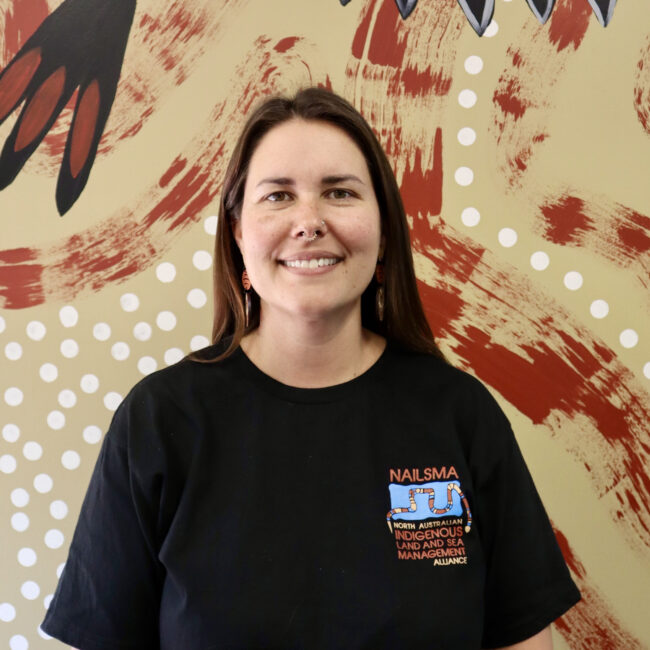
Dr. Angie Reid - Program Manager
Angie has been researching and working alongside Traditional Owners in remote northern Australia for the past 9 years. Originally from the USA where she worked as a fire ecologist, Angie came to Australia in 2015 to do a PhD studying the connection between large feral and native herbivores and Indigenous fire management in the North Kimberley and Arnhem Land. Following her studies, she worked in the Great Sandy Desert as the Ngururrpa Indigenous Protected Area Coordinator for 3.5 years - helping to establish a new land management program and ranger team, whilst also carrying out work to mitigate impacts of feral cats and camels on threatened species and important cultural areas. Angie is excited to continue working with Indigenous rangers to build capacity in remote northern Australia and protect country against invasive species.
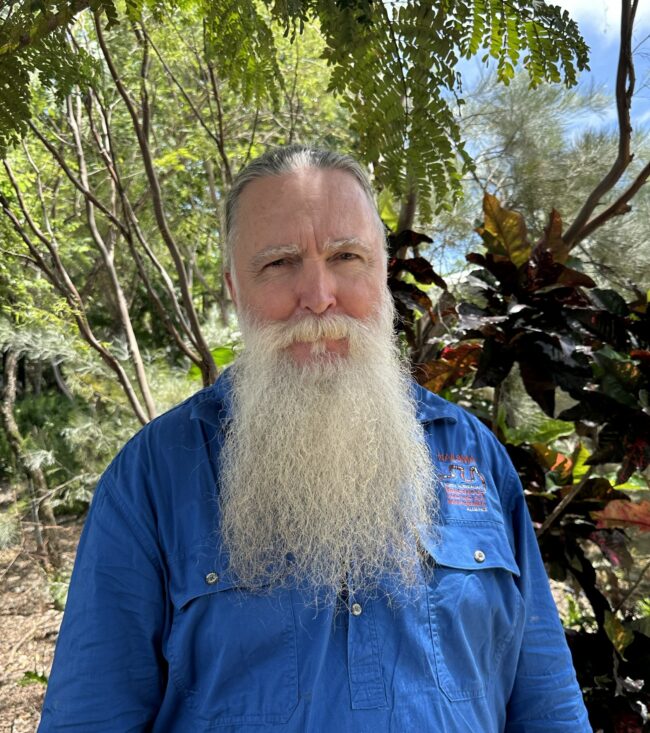
Ian J. Hutton - Regional Coordinator NT
Ian has worked with and supported Indigenous rangers managing Country right across the Top End for over two decades. He has worked in Kakadu National Park and other jointly managed national parks in the NT and supported the startup of the Learning on Country initiative, embedded with Yirralka Rangers and later, Dhimurru Rangers under the direction of senior Traditional Owners (ŋaḻapaḻ/elders), and educators at homeland schools. As an accredited trainer with a focus on delivering on Country training in land and sea management and cultural tourism, Ian has collaborated with various RTOs, established a remote training camp in the Mary River region, and most recently developed an accredited biosecurity training course for Indigenous rangers. Ian looks forward to continuing to work across the NT supporting the Protecting Country Against Invasive Species Program.
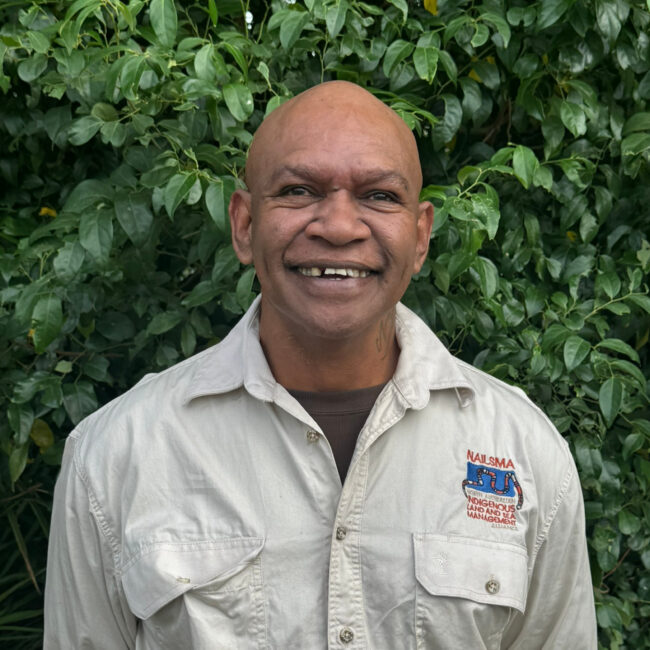
Harry Tamwoy - Regional Coordinator QLD
Harry is of both Aboriginal and Torres Strait Islander descent from Injinoo and Badu Island. Having spent close to two decades working and managing programs within Indigenous communities in northern Australia, Harry’s career has taken him from roles within National Parks Association to Queensland Fire and Emergency Services, and more recently the Indigenous Ranger Biosecurity Management Program with the Department of Agriculture Fishery and Forestry. Harry’s new role with NAILSMA will see him continue his important work within the biosecurity sector, whilst also supporting his passion for empowering Indigenous peoples.
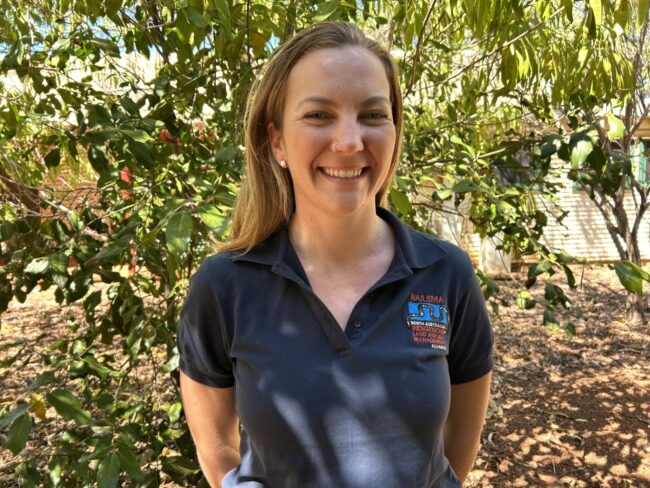
Holly Timperley - Regional Coordinator WA
Holly has worked with Traditional Owners and Indigenous ranger groups across the Kimberley since 2022 with a special interest in conservation, fire management and women’s development. Holly has a rural background and is passionate about developing opportunities for people to look after Country, on Country. She holds a Bachelor of Science in Conservation Biology and has also studied sustainable agriculture, landscape ecology and fire operations. Invasive species work has a been a throughline in all her Kimberley program work and she looks forward to continuing this work with Indigenous ranger groups and their NAILSMA projects.
The intended program outcomes are to support Indigenous Ranger Groups in northern Australia:
- protect biodiversity and cultural values from pests and weeds, providing employment and skills development.
- access training and development opportunities that improve rangers’ effectiveness in managing pests and weeds, reducing the impact of pests and weeds on Country.
- participate in knowledge transfer opportunities, extending intergenerational knowledge transfer and Indigenous rangers’ effectiveness.
- strengthen governance and risk management to effectively mitigate risks, in particular Work Health and Safety (WHS) risks, in undertaking pest and weed control activities and comply with applicable jurisdictional laws and policies regarding WHS and pest and weed management.
This program is strongly aligned with NAILSMA’s 10-year strategic plan to support the development of a thriving Indigenous Land and Sea Management Sector.
Project Funds
Following the merit-based assessment process, 10 projects involving 26 Indigenous Ranger Groups have been approved. NAILSMA is working with lead organisations to progress delivery of projects.
| Project Title | Indigenous Organisations | Other Partner Organisations | Amount Funded |
|---|---|---|---|
| Developing an indigenous led regional feral pig strategy for Arnhemland | Mimal Land Management (Lead Organisation), Arafura Swamp Rangers Aboriginal Corporation, Warddeken Land Management, Northern Land Council - South East IPA (Numburindi Rangers and Yugul Mangi Rangers) | National Environmental Science Program, Charles Darwin University | $407,000 |
| NE Arnhem Land Feral Animal Control | Laynhapuy Homelands Aboriginal Corporation (Lead Organisation), Dhimuru Aborignal Corporation | Paladin Firearm Solutions | $118,000 |
| Aerial survey and control for Siam Weed (Chomoleana odorata) in Western Top End | Northern Land Council (Malak Malak Rangers and Bulgul Land and Sea Rangers; Lead Organisation) | Weed Management Branch NTG | $110,000 |
| West Arnhem mimosa (Mimosa pigra) and West Arnhem/Croker/Cobourg Siam weed (Chomoleana odorata) survey and control | Northern Land Council (Garngi Ranger Group; Lead Organisation) | Weed Management Branch NTG | $25,000 |
| Indigenous Ranger capability building through strategic feral pig, cat and pest plant management on Country in the lower Gulf of Carpentaria | Carpentaria Land Council Aboriginal Corporation (Gangalidda & Garawa Rangers, Normanton Rangers and Wellesley Islands Rangers; Lead Organisation), APN CapeYork | $330,000 | |
| Knowledge about feral pig and cattle populations on Country | Yuku Baja Muliku Landowner & Reserves Ltd (Lead Organisation), Juunjuwarra Aboriginal Corporation, Normanby Rangers, Melsonby Rangers | Southern Cape York Catchments | $320,000 |
| Protecting Country Project | Gunggandji Land and Sea Rangers (Lead Organisation), Djunbunji Limited | $10,000 | |
| Capacity building to manage feral herbivores in the Kimberley | Karajarri Traditional Lands Association (Lead Organisation), Wunambal Gaambera Aboriginal Corporation | Bush Heritage Australia | $330,000 |
| Feral Pig Management – Nyikina Mangala Country | Walalakoo Aboriginal Corporation | $110,000 | |
| KLC East Kimberley Weed and Feral Animal Project | Kimberley Land Council (Balanggarra Rangers, Paruku Rangers, Kija Rangers; Lead Organisation) | $154,000 |
The Guide provides information on the program and application process. Almost $2 million has been allocated to projects equally shared across WA, NT and QLD. Limited funds are still available for capacity building activities. Groups engaged under the Indigenous Ranger Biosecurity Program are eligible.
Interested Indigenous Ranger Groups are encouraged to contact Regional Coordinators to discuss capacity building activities. Contact details below:
NT - Ian J. Hutton: ian.hutton@nailsma.org.au
QLD - Harry Tamwoy: harry.tamwoy@nailsma.org.au
WA - Jackie Wemyss: jackie.wemyss@nailsma.org.au
Program Manager - Dr. Angie Reid: angie.reid@nailsma.org.au
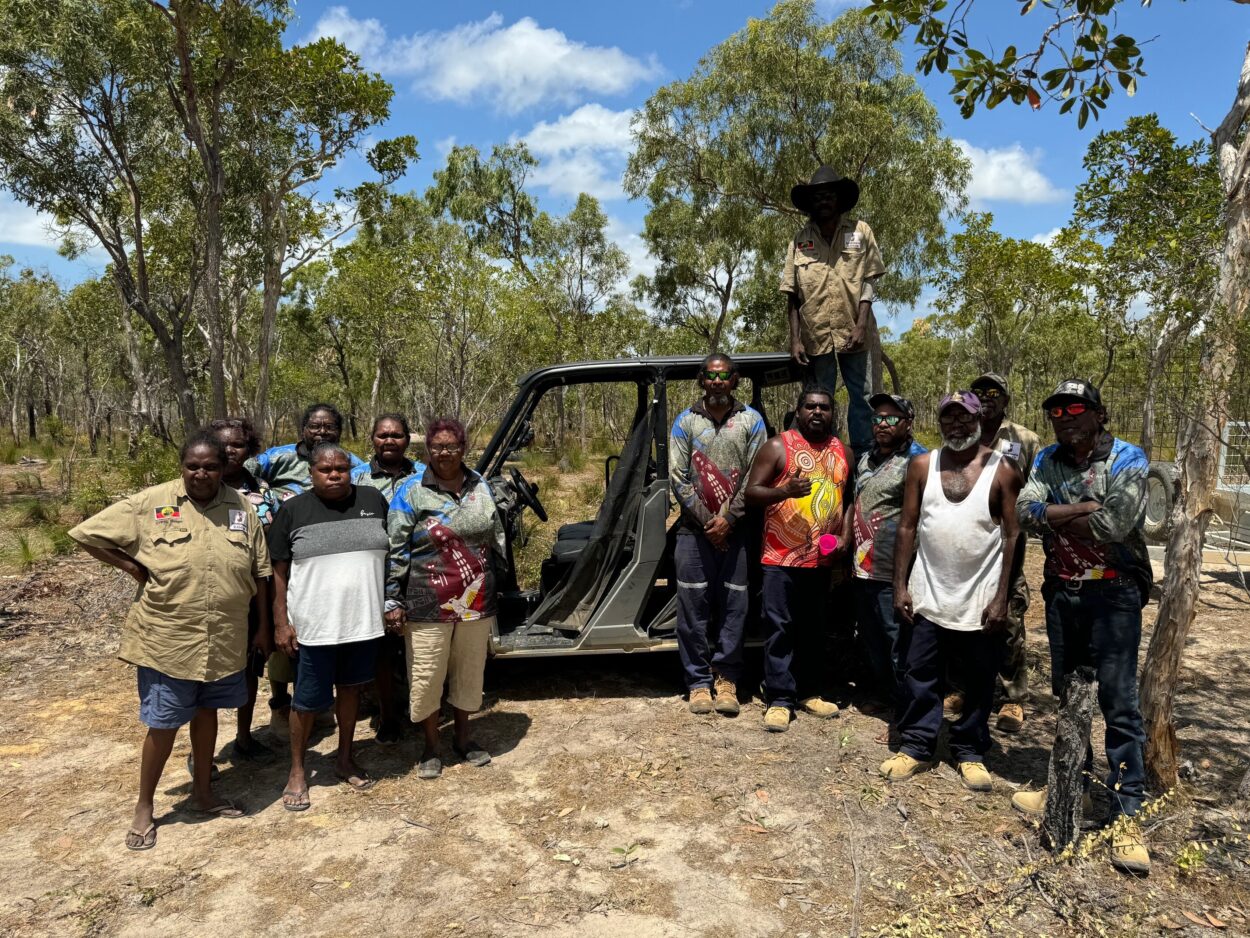
Juunjuwarra Rangers near Starke River, QLD with their new utv funded by the PCAIS program. The utv helps the rangers to access country for feral pig and feral cattle management that is inaccessible with regular ranger vehicles.
2024-2025 Program Achievements
The Protecting Country Against Invasive Species (PCAIS) program continued to grow in strength throughout 2024-2025.
The program supported over 100 training events and knowledge transfer activities including attendance at forums/workshops/conferences, ranger exchanges and multi-generational activities to meet the needs of the 48 Indigenous Ranger Groups supported.
Program activities resulted in major outcomes for on-ground invasive species management as well, including:
- 3,430ha of weed control;
- 53,256ha of comprehensive aerial and ground surveys across suitable Siam weed habitat;
- 27 feral pigs collared and currently logging movement data for better understanding of local population and improved management outcomes;
- over 13,250 invasive species culled;
- over 2,123,000ha surveyed (aerial and ground surveys) for feral animals and associated damage; and
- 3,395,800ha covered in aerial culling operations.
Equipment purchased through program funds supported 19 Indigenous Ranger Groups to significantly upgrade equipment to more effectively tackle invasive species on Country including required weed spray units, feral animal trapping and culling equipment, and vehicles to allow for better access to Country.
The PCAIS team developed a suite of animal ethics and WHS risk management documents that were distributed to Indigenous Ranger Groups and many groups adopted these documents into their risk management systems.
Indigenous Ranger Groups supported by PCAIS conducted 32 governance and WHS-related activities.
PCAIS activities led to the review or development of 4 corporate firearms policies in NT and WA to ensure that policies are in-line with current legislation.
PCAIS has funded or supported 15 formal training events and 25 informal training events through project (contracted) funds and an additional 15 formal and 7 informal training events with capacity building funds in response to Indigenous Ranger Groups' requests.
PCAIS funded or supported a total of 40 knowledge transfer activities including attendance at forums/workshops/conferences, ranger exchanges and multi-generational activities to ensure intergenerational knowledge transfer is built into project activities.
In total, this program has funded or supported 199 associated activities with over 2,300 participants including 1,194 Indigenous men and 560 Indigenous women and the important work that Indigenous Rangers do to protect Country from invasive species was promoted through media, short films, animation, and presentations at conferences and workshops.
The results demonstrate the strength of Indigenous-led land and sea management and the integral role of rangers in tackling the impact of invasive species across the north of Australia.